Trekking · 4 days / 3 nights
4-Day Haba Snow Mountain Summit (5,396 m)
A first snow peak, with a 1:1 summit guide, crampons and axe supplied — the most accessible 5,000-metre climb in China.
Haba is 5,396 m and does not require technical climbing, which is exactly why it is the standard first summit in China. It is still 1,300 m of ascent from Base Camp in one push, and we do not pretend otherwise.
Day by dayExactly what happens, in order — nothing added for the brochure.
Lijiang to Haba Village
Gather at the designated meeting point in downtown Lijiang at 1. 30 PM, then board the group vehicle for a 4-hour drive to Haba Village. The route passes through Tiger Leaping Gorge, offering scenic views along the way, with arrival expected around 5:00 PM.
Check into a standard twin room at a local guesthouse. After a brief rest, enjoy a home-style dinner prepared by the guesthouse.
Following dinner, your guide will deliver a thorough safety briefing covering the next day’s climbing route, altitude awareness, and essential precautions. He/she will also inspect each participant’s personal gear to ensure everything is in proper condition.
Overnight stay is in the guesthouse’s twin-bed rooms in Haba Village.
Note. Boarding is strictly at the designated meeting point in Lijiang. It is highly recommended that you arrive in Lijiang at least one day in advance and book accommodation near the meeting point to guarantee a smooth departure.
Haba Village to Base Camp
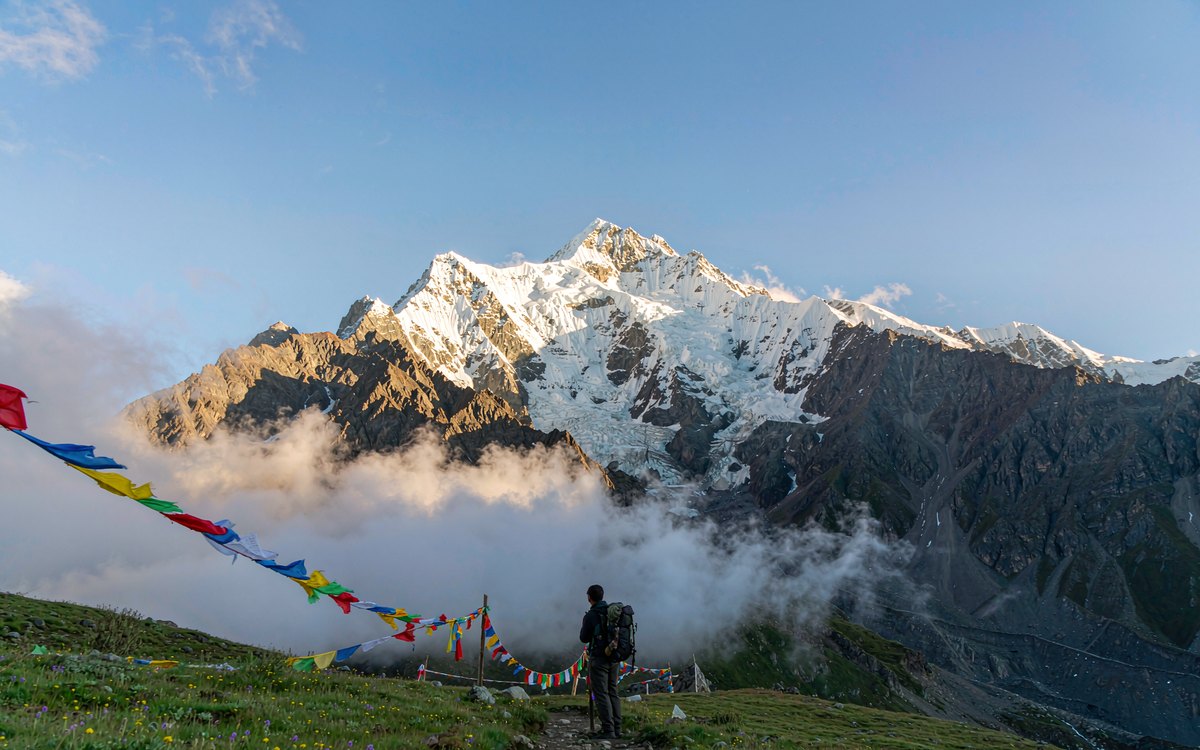
Haba Snow Mountain, rising to 5,396m, takes its name from the Naxi language, where Haba means “flower of gold.” It lies in the southeastern part of Shangri-La County, facing Jade Dragon Snow Mountain across the Tiger Leaping Gorge. Formed by the intense uplift of the Himalayan orogeny and subsequent Quaternary tectonic movements, the peak presents a rugged, majestic, yet mysteriously beautiful appearance. A combination of favorable factors—moderate altitude, well-established routes, and reliable support infrastructure—has made it the premier choice for first-time snow-mountaineers.
The elevation gain from Base Camp to the summit is 1,300m, a climb that is unusually demanding even among entry-level snow peaks, placing considerable strain on both physical fitness and mental resilience. Over the entire itinerary, the cumulative vertical drop from Haba Village to the summit amounts to 2,700m, allowing trekkers to experience a complete cross-section of alpine ecosystems in a single day: ancient virgin forests, vast rhododendron thickets, high-altitude meadows, glacial moraine lakes, and finally, above the snowline, the breathtaking sunrise over a sea of clouds.
Haba Village sits at 2,700m, Base Camp at 4,100m, and the summit at 5,396m. Under clear skies, the ascent offers panoramic views: due north, the Three Holy Mountains of Yading; to the northeast, Mount Gongga (the “King of the Shu Mountains”); and to the northwest, Kawagebo, the main peak of Meili Snow Mountain. The optimal climbing seasons are March–June and September–December. In January and February, high winds often reach Force 7–8, while the rainy season from late June to late August makes climbing still possible but somewhat more challenging. During the Dragon Boat Festival (early June), the mountainsides burst into bloom with vibrant rhododendrons of every size and colour.
Today’s Itinerary. After breakfast, we trek from Haba Village to Base Camp. The trail covers about 9 km and takes 4 to 6 hours, ascending steadily through changing terrain.
Important Note. The 9-km trek typically takes 4–6 hours. Departure from Haba Village is around 9:00 AM. For those who wish to conserve energy, horseback riding is available at an additional cost (paid locally).
Summit day: 4,100 m to 5,396 m
This morning, set out from Base Camp for the summit attempt. After reaching the top, descend via the same route back to Haba Village. The night is spent in a standard twin room at a local guesthouse in Haba Village.
Breakfast. Noodles, plain rice porridge, and other light staples.
Dinner. Home-style local dishes.
Important Notes
The overnight stay in Haba Village is offered as a complimentary service. If you choose not to use it, no refund will be issued.
Should you prefer to return directly to Lijiang on Day 3 instead of staying overnight, we will do our best to arrange transportation for you (please notify your guide in advance).
Back to Lijiang
After breakfast, depart Haba Village by vehicle around 9. 30 AM. The drive back to Lijiang takes approximately 3 hours, with arrival around 12:30 PM, where the tour concludes.
Note. Please ensure your onward travel arrangements allow for this arrival time.
What is in the priceAnd what is not. We would rather you knew now.
✓Included
- Haba Snow Mountain entry permit, conservation fee and Base Camp sanitation fee
- 1:1 personal summit guide from Base Camp to summit
- 1 night at Base Camp (shared dormitory) and 2 nights in a Haba Village guesthouse (twin rooms)
- Meals: dinner on day 1; breakfast and dinner on days 2 and 3; breakfast on day 4
- Mule pack service for group equipment and luggage
- Complimentary: high-altitude accident insurance (¥800,000), crampons, ice axe, helmet, harness, trekking poles
−Not included
- Horse rental between Haba Village and Base Camp (¥300 one way, ¥600 return)
- Lunch on days 1, 2 and 3
- Summit guide gratuity (customary from ¥200 on a successful ascent)
- Flights or trains to and from Lijiang
- Official tax invoice, if required
Prices depend on dates, party size and the hotels you choose, so we quote per trip rather than publish a number that would be wrong. Send us your dates and we will come back with one figure — in writing, with the hotels named.
PracticalThe things people ask before booking.
Tell us the dates. We will send this route back priced, with the hotels named.
Everything here is a starting point — we cut days, add nights, swap hotels and change the order of cities all the time. Rebecca answers in English, usually within a few hours.