
Sixteen days across seven places. The obvious question is whether that is one place too many. The honest answer: it is a lot — but it works, on three conditions. The order has to be right, the flights and trains have to be locked in early, and you allow yourself exactly one thing a day that you would be sorry to miss.
Here is who we are, because it matters for the arithmetic. A couple, both just past fifty, reasonably mobile, allergic to rushing, allergic to changing hotels every night, and increasingly allergic to paying for something that turns out to be work.
We had half a month of leave in September. I spent two months reading guides before we left, and the guides contradicted each other: half a month is barely enough for Yunnan; Zhangjiajie is unmissable; Guilin has been flattened by tourists; do not try to see both Yunnan and Hunan in one trip. So we strung the unmissables together into one line and went: in at Chongqing, out at Guangzhou, no doubling back. We have just come home, and everything below — the route, the money, the mistakes — is written down for anyone standing where we were standing in June.
“Sixteen days in seven places — will we just be travelling every single day?”
Some days, yes. But only two of the sixteen were pure travel days. Every other day had one main sight and, at most, one small one. That is the difference between a route and a forced march, and it comes down to sequence, not speed.
— the question we asked before booking, and the answer we got
One
Why the route runs the way it does
Most first itineraries run Beijing – Xi'an – Shanghai, and that is the classic line for good reasons. We had already done the classics. What we wanted this time was mountains, water and ordinary life, which points south-west — so the line runs from the south-west to the far south.
In at Chongqing, out at Guangzhou. A mountain city at one end, a southern gateway at the other, with Yunnan, western Hunan and Guilin strung between them. Not one kilometre is repeated, and flying home from Guangzhou is materially cheaper than flying home from Guilin.
The Yunnan leg is Kunming, Dali, Lijiang — then four hours back to Kunming by rail rather than a flight out of Lijiang. One less security queue, one less wait, one less chance of an overweight bag, and the last stretch of the journey has Erhai out of the window.
Zhangjiajie is the one place worth paying more for: book the hotel inside the scenic area and stay three nights. The park ticket and the Bailong elevator both want an early start, and if you sleep in the city you spend two hours a day just getting in and out of the mountains.
Furong sits neatly between Zhangjiajie and Guilin. One night in an inn above the waterfall, and the next afternoon you are on a train south.
Two
The third time we got it right
2019: a coach tour. Cheap. Genuinely cheap. Also rushed, and the headline sights were mostly a photograph and a shuffle back to the bus, with two shopping stops a day folded in. We later found out we had been sold on to a local operator — the quality of our holiday was never ours to choose.
2023: we planned it ourselves. Hotels, tickets, trains, drivers, all of it on one spreadsheet, maintained by me. Two weeks before departure I was still fighting for train seats, and we were still rewriting the itinerary on the ground. The low point was dragging two large suitcases through a station transfer with twenty minutes to spare.
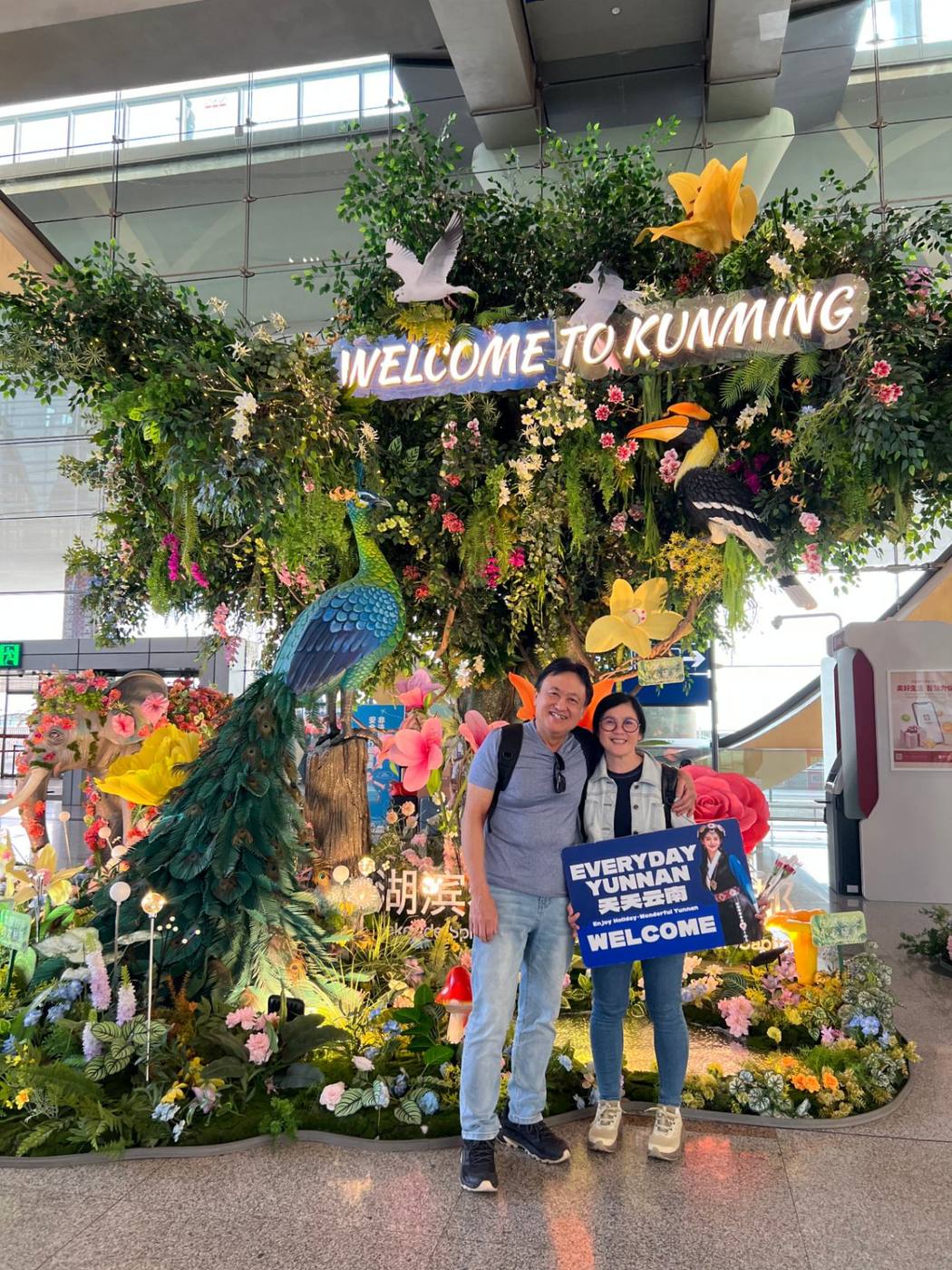
2026: we asked a designer. Rebecca, at Seetrip in Kunming, arranged the whole sixteen days. During the trip we spent our attention on exactly two decisions a day: what to wear, and what to eat. That is the entire difference.
The clearest illustration: it rained one afternoon in Dali and the cycling was moved to the following morning with one sentence — “No problem, I'll shift it.” Five words. When you are doing your own planning, those five words are the most expensive thing in the world.
Three
Where the money went
Two people, sixteen days, ¥16,983 each — about AU$3,590 at the September rate — for a total of ¥33,966. That excludes international flights and the visa fee, and includes every practical difficulty that begins after you land.
16 days · 15 nights · two travellers
International flights and the visa fee are not in this figure. Nothing else that you would actually need to pay for on the road is missing from it.
Inside the price
- 15 nights, four-diamond hotels, breakfast included
- 2 internal flights and 4 high-speed rail sectors, second class
- Private vehicle and driver every day, including fuel, tolls, parking and the driver's own meals and room
- English-speaking guides, with a Chinese driver only in a few cities
- Every ticket in the itinerary: Yulong glacier cableway, Bailong elevator, Tianmen Mountain, Silver Cave, Yulong River bamboo raft
- The meals marked in the itinerary — in Yunnan, most of them
- Domestic travel accident insurance in China
Paid separately
- International flights
- Visa fee — they supply the official invitation letter and the hotel and flight confirmations, nothing more
- Tips, entirely voluntary, and no amount was suggested
- Personal spending and optional extras
- Personal travel insurance beyond the basic policy included
- Excess baggage
Why that is not expensive: the four headline tickets alone — the Yulong glacier cableway, the Bailong elevator, Tianmen Mountain and the Yulong River raft — come to well over two thousand yuan for two people. Add seven flights and train sectors and fifteen hotel nights, and booking each one separately would struggle to beat this number, before you count the time and the trial and error.
If you are at the same stage we were in June
Send your dates. Get a route, not a brochure.
Tell us how many of you there are, roughly when, and the one thing you would be sorry to miss. You will get a route outline and an honest number — usually within a day, and there is no charge for the first version, or the fourth.
Four
The sixteen days, exactly as they happened
What follows is the itinerary as it was walked, not as it was written. What time we left, how long it took, and which parts deserved more time than they got.
Day 1 · 10 September · Chongqing
Land, and schedule nothing
Down at Jiangbei a little after eleven, with the driver already at the barrier holding our name. The hotel was in Guanyinqiao, so the shopping streets and a noodle stall open at ten at night were both a lift ride away. We booked nothing at all for day one. Anyone who did not sleep on the plane and then goes sightseeing will spend day two regretting it.
Day 2 · 11 September · Chongqing
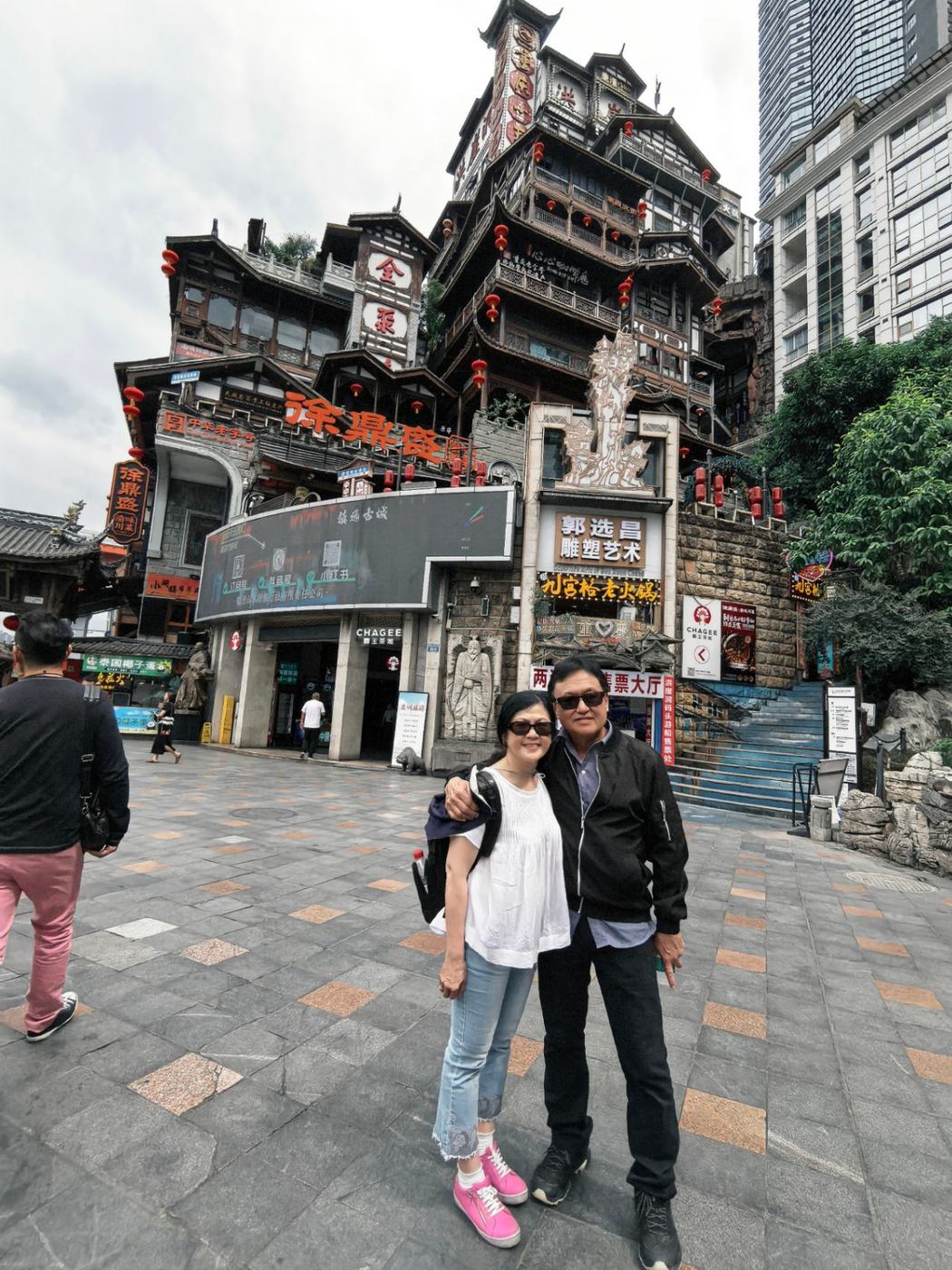
The cableway, Jiefangbei, and Hongya Cave after dark
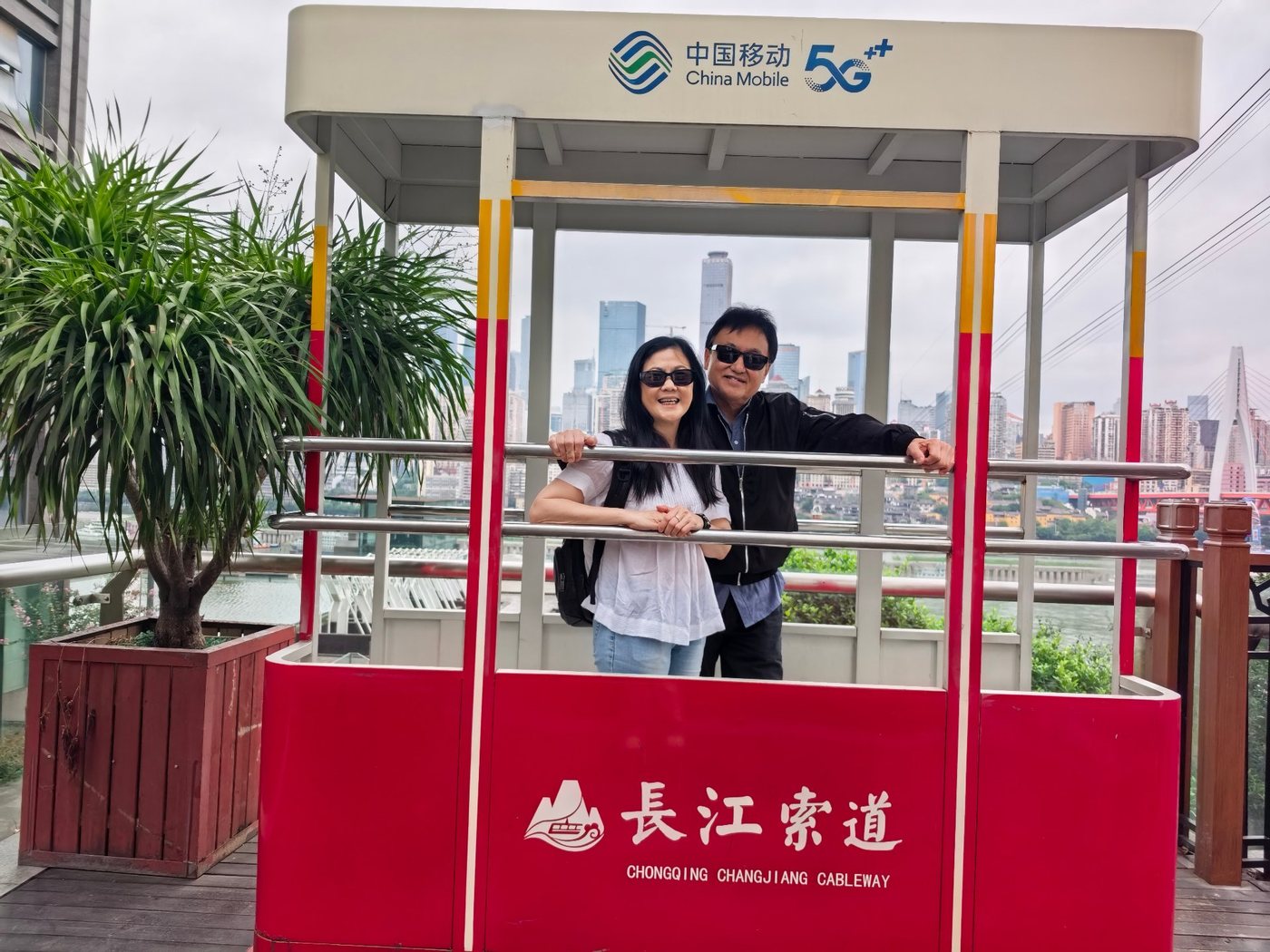
Forty minutes in the queue for the Yangtze cableway, and worth all of it: five minutes over the river with the city stacked up on both banks. In those five minutes you understand why Chongqing is called the mountain city, and no photograph explains it as well.
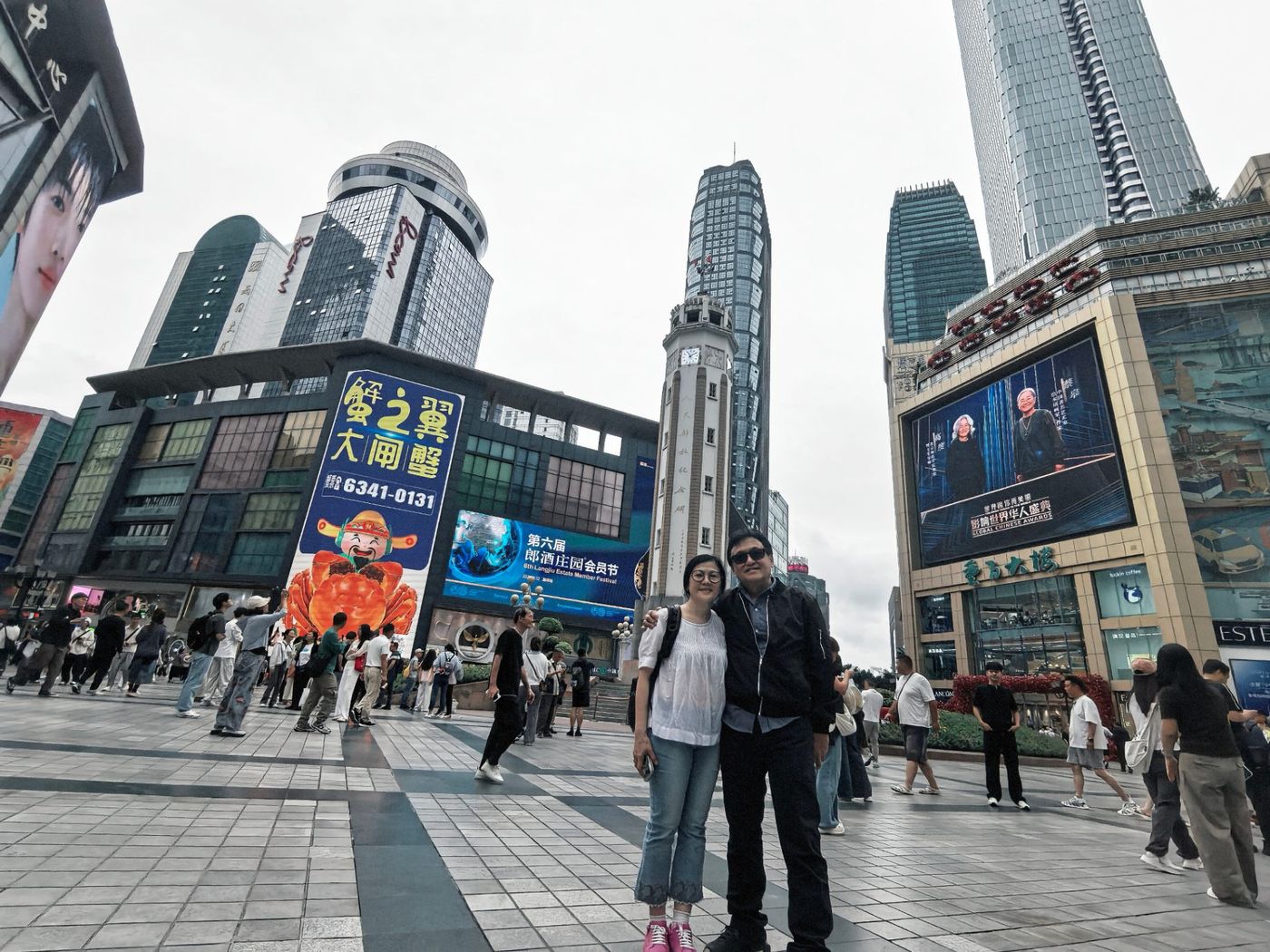
The afternoon went to Jiefangbei. Back to the hotel for two hours' sleep at six, out again at eight for Hongya Cave — and this is the thing to remember: the lights are best from half past seven. In daylight it is an arcade of shops with a view.
Day 3 · 12 September · Chongqing
A day with no car and no guide — our request
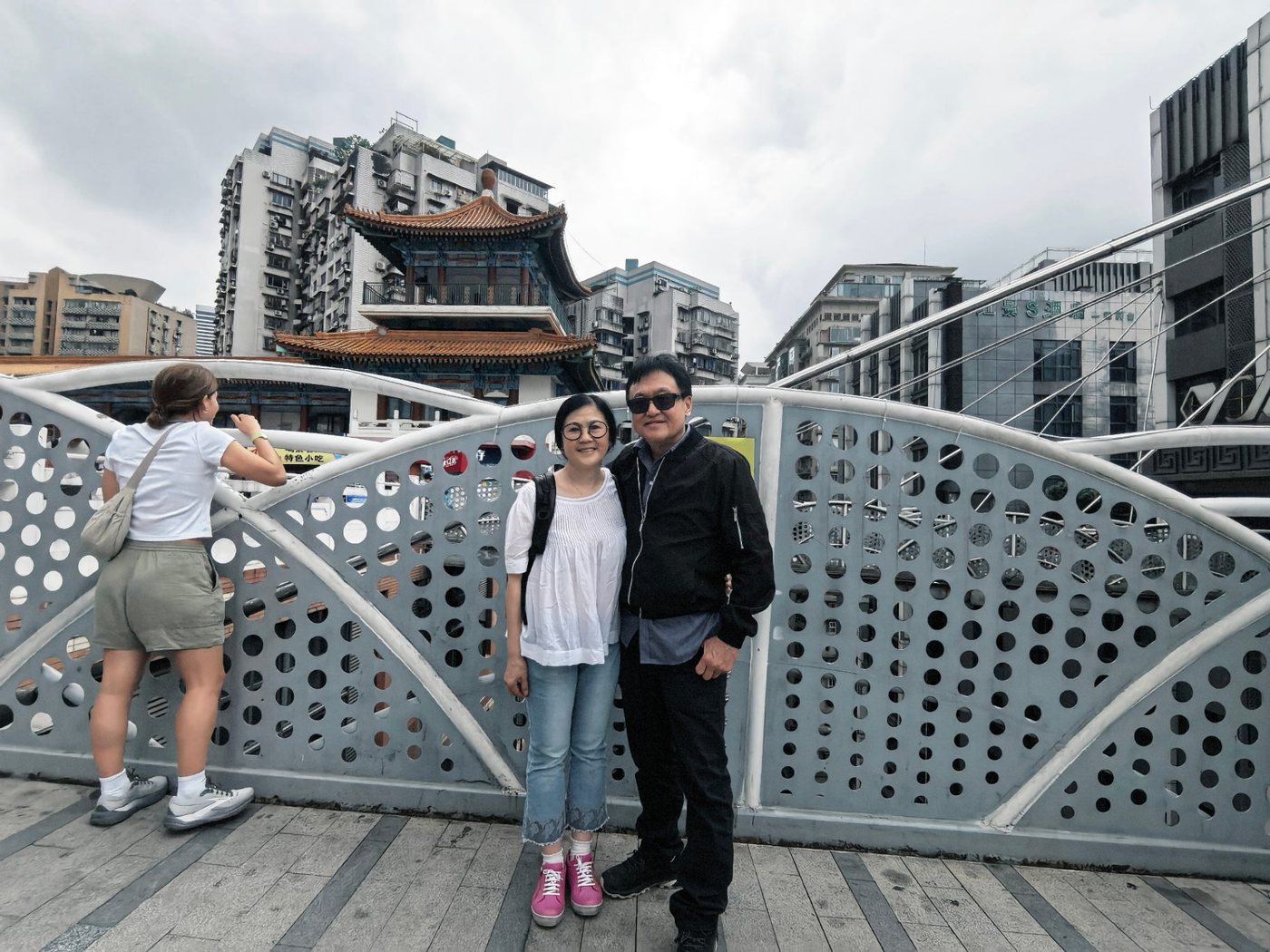
We asked for this one ourselves. The monorail to Ciqikou, chen mahua and a bowl of sour-hot noodles, and enough walking that our legs filed a complaint. One day in a fortnight where nothing at all is arranged turns out to matter more than two extra sights. We talked more that day than in the whole of the queueing.
Day 4 · 13 September · Chongqing to Kunming
Two hours in the air, and a tree in arrivals
A half past three flight, two hours, and then the arrivals hall at Kunming with a tree in full flower standing in the middle of it, and Rebecca holding a card with our names on it, waiting. The hotel was central; ten minutes on foot and we were on Nanping Street.
Day 5 · 14 September · Kunming to Dali
Zhuanxin market, which may be my favourite place on the trip
The Zhuanxin food market in the morning. One hour is nowhere near enough. Basket after basket of wild mushrooms, cut flowers, Yunnan ham, pickles, and stallholders who push a handful at you to taste before you have decided anything. It is the least touristy hour of the entire sixteen days, and the part I have thought about most since.
Lunch at Jianxinyuan: crossing-the-bridge noodles arrive as a tray of small dishes and one bowl of broth still boiling, and the pork slices cook as they go in. Then the old streets and the Jiubei building, and four and a half hours on the road to Dali. At the hotel by half past eight, dinner in the old town.
Day 6 · 15 September · Dali
Old town, Erhai, and the S-bend at Panxi
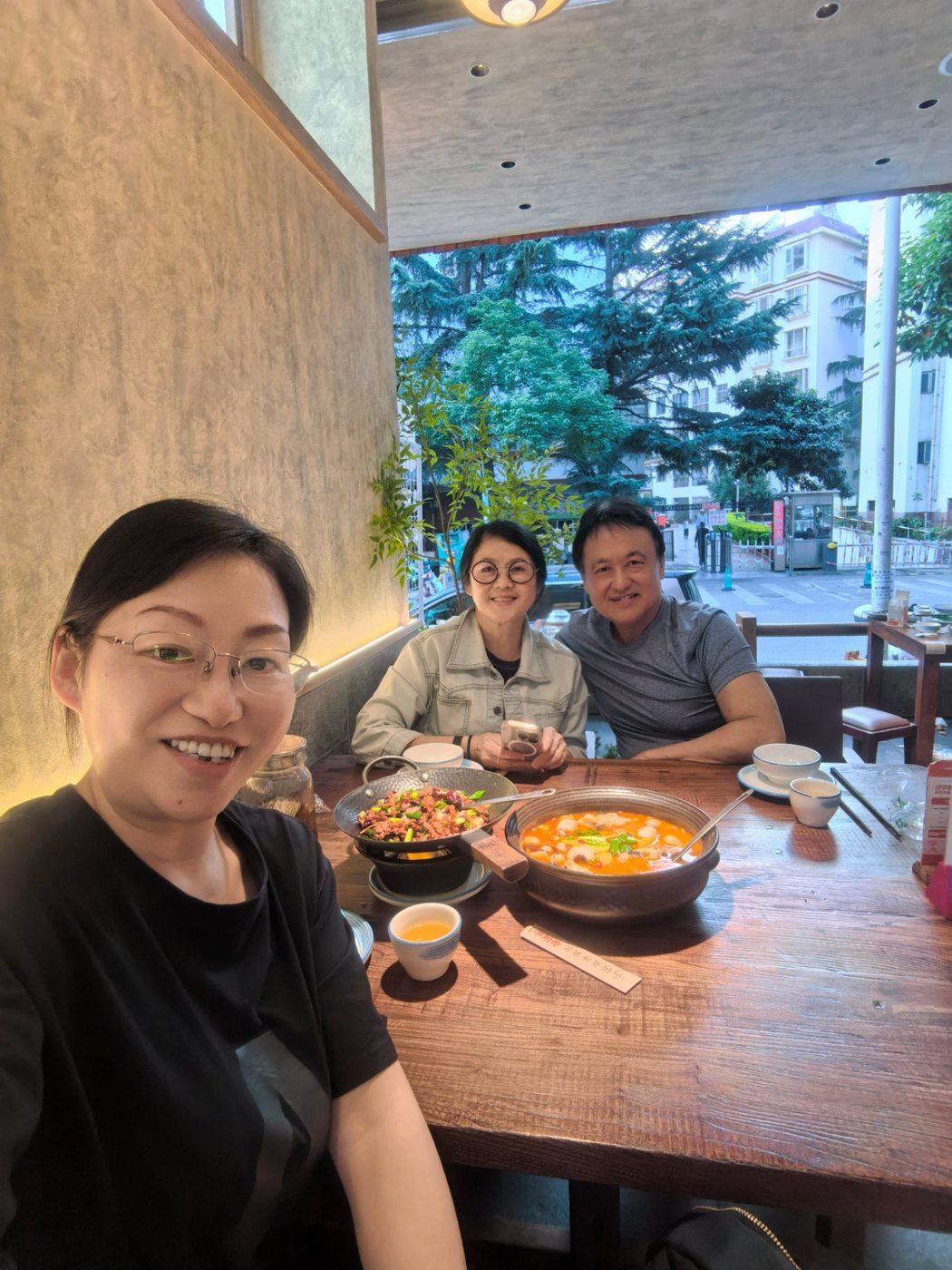
Dali's old town early, when the flagstones are still damp and the shops are still shut. At eleven we drove out to the stretch of Erhai shore that everyone calls Dali's Santorini, ordered a pot of tea and a plate of pastries, and sat on the terrace for over an hour saying nothing much at all.
The afternoon was the Panxi S-bend on bicycles. Take a jacket — the wind on Erhai is not a breeze, it is a force that will eventually push you off the bike.
Day 7 · 16 September · Dali to Lijiang
Xizhou, three cups of tea, and Lijiang after dark
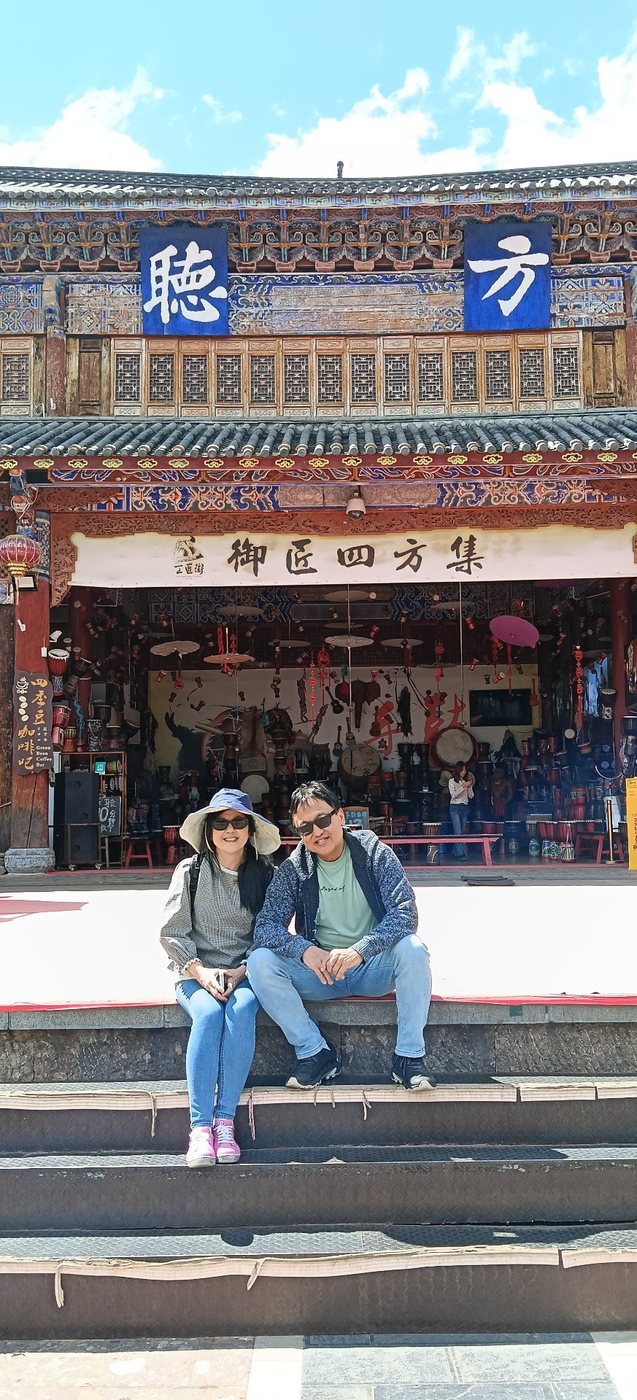
Xizhou is quieter than Dali and better for it: white walls, grey tiles, corn drying on the doorstep. At midday, the Bai three-cup ceremony — bitter, then sweet, then the aftertaste. It is a philosophy delivered in three cups, and it is exactly the temperament of this part of the country.
Two hours by road to Lijiang, then Black Dragon Pool, which needs two hours at most: on a clear day the Yulong range stands in the water. In the evening, Zhongyi market — where locals actually buy vegetables, and far more interesting than the commercial streets of the old town. Dinner was a black truffle and wild mushroom hotpot, then the old town with the lights on.
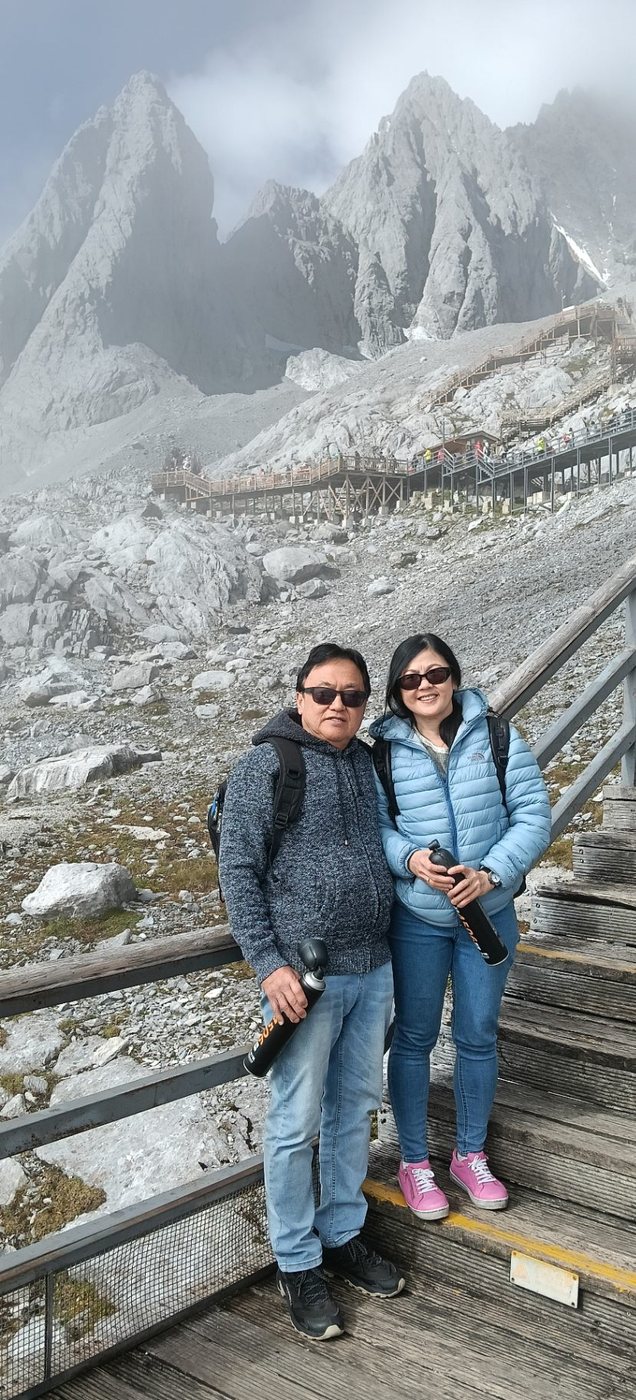
Day 8 · 17 September · Yulong Snow Mountain
4,506 metres, and the hardest day of the sixteen
An hour in Shuhe old town first, then the sightseeing train up the mountain. Thirty-five minutes with snow, alpine meadow and Naxi villages going past the window — far better than the coach road, and the best-value ticket of the trip.
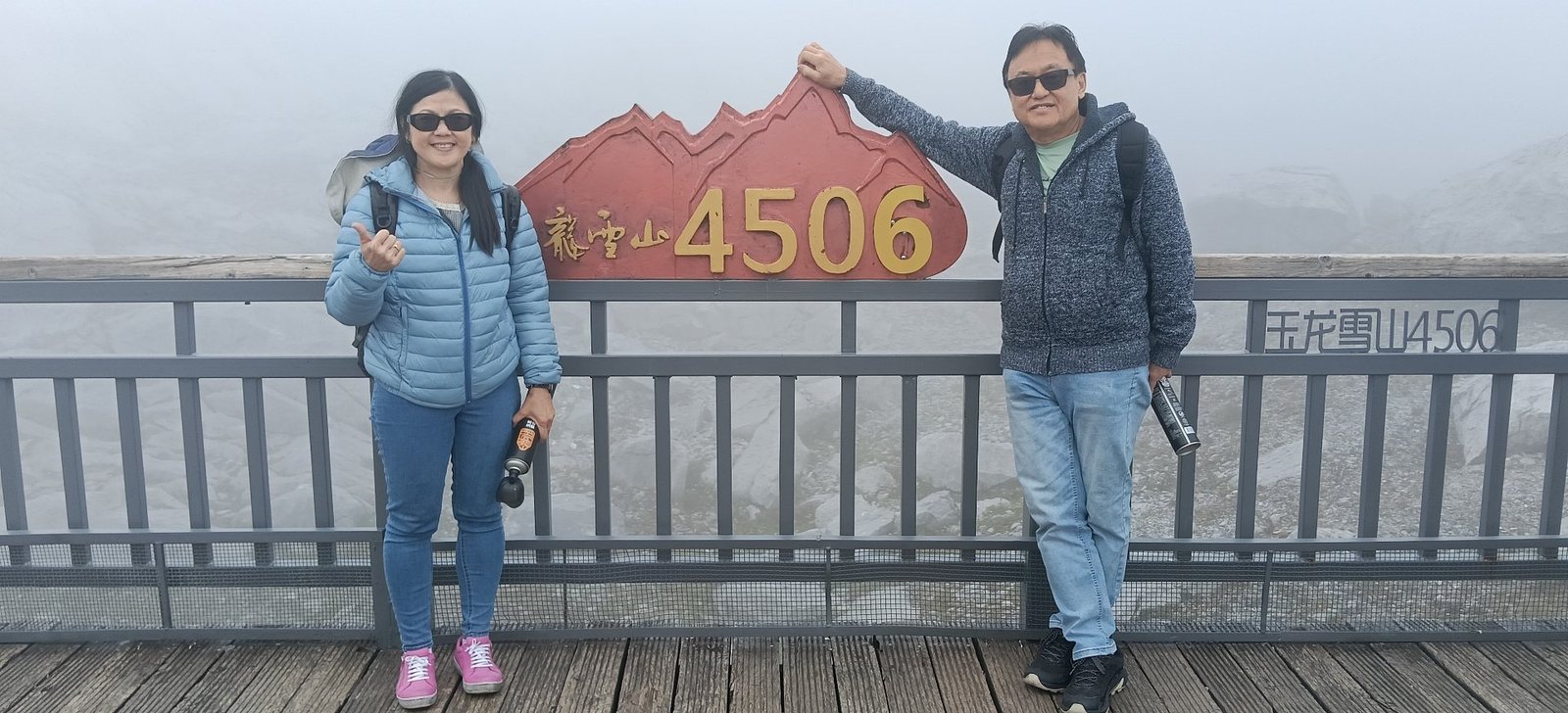
The glacier cableway puts you out at 4,506 m. Walk slowly. Three steps, a pause, three more; do not run and do not jump. Buy the oxygen at the bottom — it costs double at the top. The afternoon went to Blue Moon Valley and Ganhaizi, where the water is a blue-green that does not look natural, an hour to Lijiang station, and four hours back to Kunming by rail. This was the most demanding day of the whole journey, and the one we would keep if we could only keep one.
Day 9 · 18 September · Kunming to Zhangjiajie
A pure travel day, and why it was worth it
07:20 flight, Changsha at 09:40, fifteen minutes from the airport to the rail station, the 14:34 train, Zhangjiajie at 16:43, and another hour by road to the hotel. No guide that day, only a driver, and on paper it reads like punishment.
It also saved an entire day compared with stopping overnight in Changsha — and that day came back as an extra mountain in Zhangjiajie. Calculate this one in days, not in comfort.
Day 10 · 19 September · Zhangjiajie
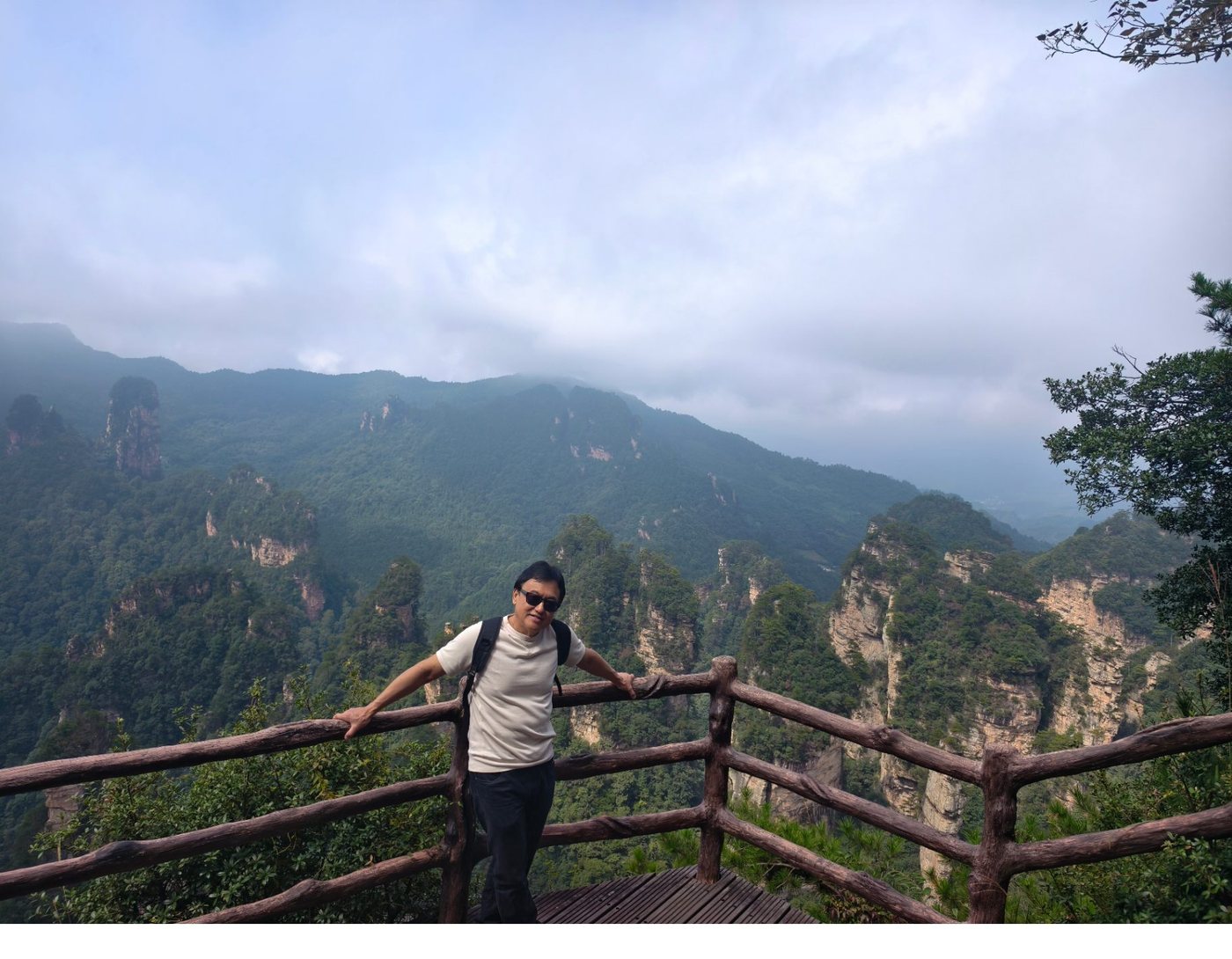
Yuanjiajie, Tianzi Mountain and sixty-six seconds in a lift
The Bailong elevator takes sixty-six seconds to the top. Outside the glass is a wall of vertical stone pillars, and everybody inside goes quiet and stays quiet, faces pressed to the window.
The pillars at Yuanjiajie are the ones the floating mountains in Avatar were modelled on. It rained while we were up there, and the mist came and went, so the pillars appeared and disappeared and appeared again. Better than a clear day, honestly.
Day 11 · 20 September · Zhangjiajie
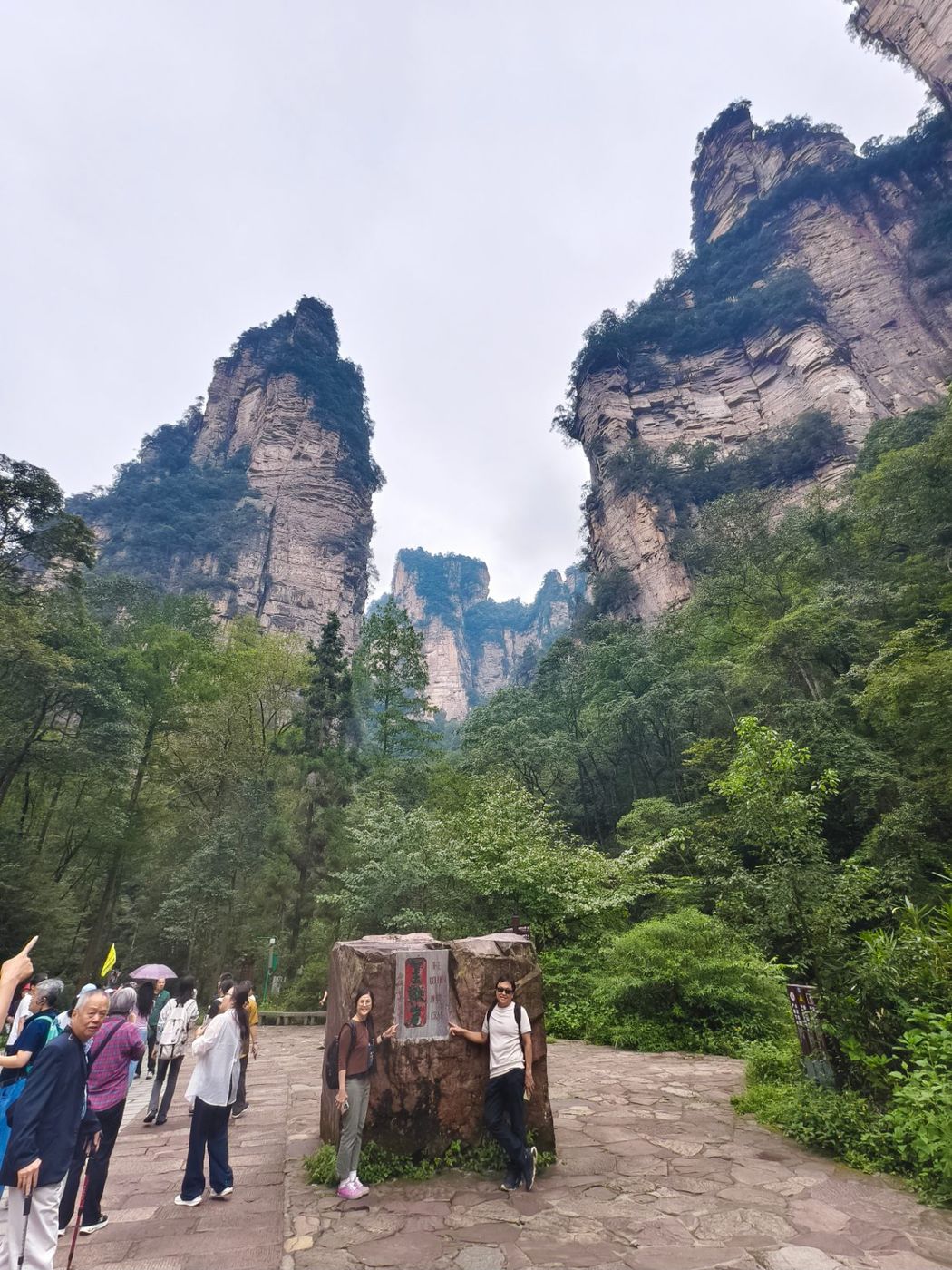
Huangshizhai, and seven and a half flat kilometres
The Jinbian Stream walk is 7.5 km of water and forest, flat the whole way, and took us two and a half hours. It is the kind of path that suits absolutely everybody, including the people who said they were not walking anywhere.
From the Huangshizhai viewpoint the stone forest runs to the horizon. That day the cloud sat on top of it, and the peaks came out the far side like islands.
Day 12 · 21 September · Tianmen Mountain to Furong
999 steps, then a night above a waterfall
Tianmen Mountain has 999 steps up to the gate. We took the escalator, and we are not ashamed of it. The glass walkway we did on foot, and yes, your legs do go strange on you.
Twenty minutes by train to Furong, and an inn directly above the waterfall. The lights come on after dark, the water runs all night, and we slept better there than anywhere else on the trip.
Day 13 · 22 September · Furong to Guilin
The twenty-nine-minute transfer
We stayed in the old town until ten, took the 13:05 train and reached Guilin at 19:47. The change is at Huaihua South and gives you twenty-nine minutes — it looks alarming on the ticket and is fine in practice. Do not leave the station. Follow the transfer signs, and check the platform before you set off, not after.
It was dark when we arrived and the hotel was beside the station, which is exactly what you want at that hour: bags down, lights out.
Day 14 · 23 September · Guilin
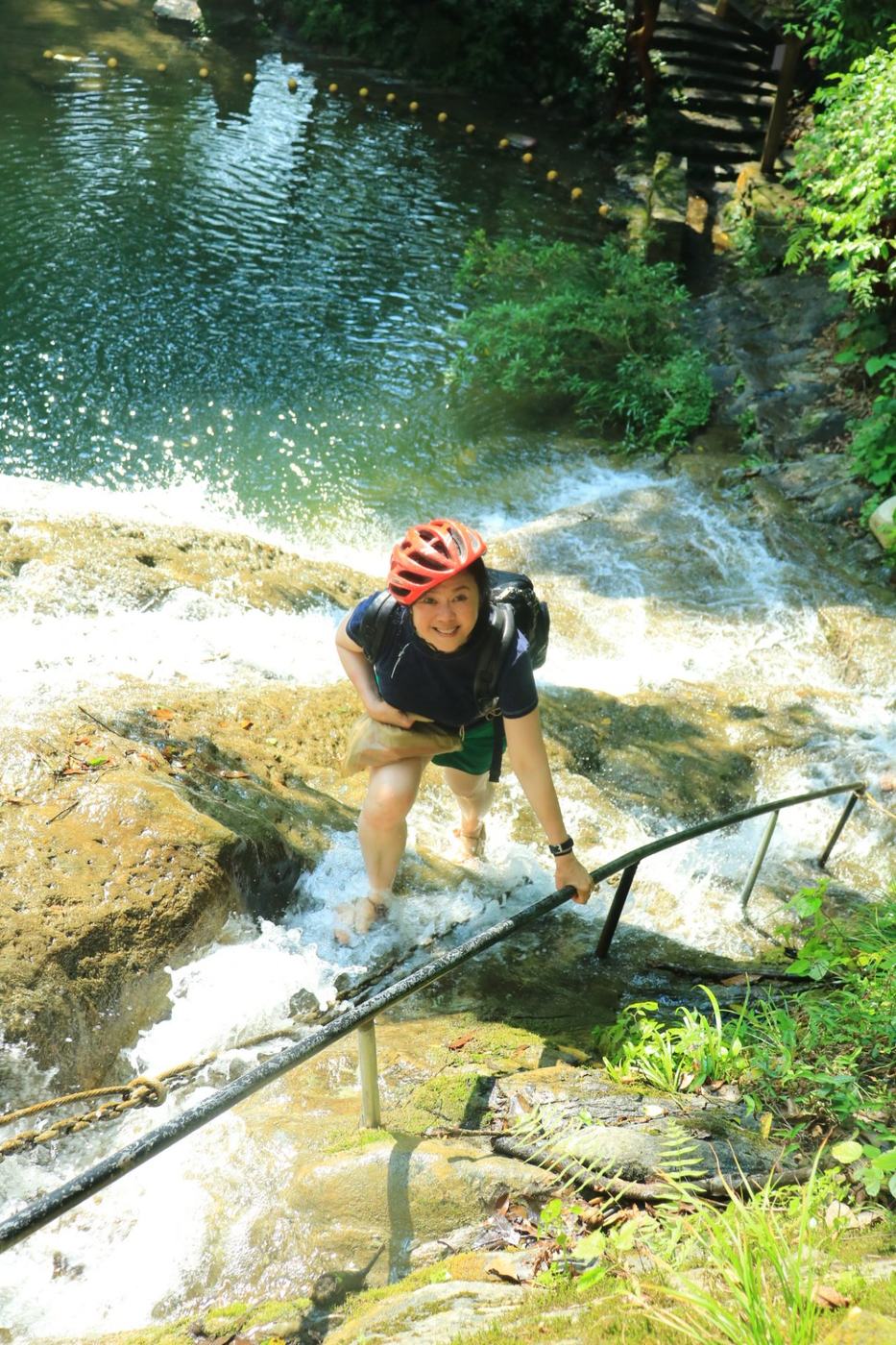
A waterfall you climb, and the city from above
Gudong is a waterfall you go up rather than look at. Straw sandals for ten yuan, a helmet from the gate that you must actually wear, a chain to hold, and then upstream with the water hitting your legs hard enough to make you shout. The most genuinely playful day of the sixteen.
In the afternoon, the Yaoshan cable car and Guilin from above: ring after ring of karst peaks with a city in the middle of them, like a tray of bonsai.
Day 15 · 24 September · Guilin to Yangshuo
The twenty-yuan view, a bamboo raft, and eight-yuan noodles
The stretch of the Li River at Xingping is the view printed on the back of the twenty-yuan note. Ten minutes out from the bank, the entire boat was holding a banknote up against the landscape to check.
In the afternoon, a two-person bamboo raft on the Yulong River. The boatman taps his pole against the water so you can hear the single note it makes, and for a moment the whole river is that sound. Silver Cave is cold enough to want a layer. We stayed on West Street in Yangshuo, which was wall-to-wall people, so we turned into a back alley and ate noodles for eight yuan.
Day 16 · 25 September · Guilin to Guangzhou, and home
Elephant Trunk Hill, then the airport
Elephant Trunk Hill in the morning and the Sun and Moon pagodas from outside, the 13:11 train to Guangzhou at 16:19, and then the flight home. Everybody went quiet on the last day. Sixteen days is genuinely tiring — but there is a particular sort of calm that comes with having seen everything you meant to see, and it is hard to describe without sounding sentimental.
Five
If we could keep only six moments
- 01The sign at 4,506 mWe were shivering while we queued for the cableway, and then we stood in front of the sign and everybody grinned like children.
- 02Five minutes over the YangtzeBuildings on both sides, river underneath, and Chongqing explained in full.
- 03The minute the mist lifted at YuanjiajieThe pillars came out of the cloud and the whole platform said oh at the same time.
- 04The water at Blue Moon ValleyA blue-green that does not look natural, as though somebody had poured paint into it.
- 05The raft on the Yulong RiverThe boatman said “don't move”, and then the only sound on the river was a pole tapping water.
- 06The waterfall at night in FurongLying in bed listening to water, and thinking: that was worth it.
Six
Five small things that made it easy
- Hotel location beats hotel star rating.Three nights inside the Zhangjiajie scenic area meant no morning drive; two nights beside Guilin station meant bags down and straight out. Four-diamond was never the point. The address was.
- Take the train wherever there is a train.Lijiang to Kunming, Changsha to Zhangjiajie, Furong to Guilin — all rail. One less security queue, one less baggage wait, one less overweight charge.
- Lock the tickets early.The Yulong cableway, the Bailong elevator and Tianmen Mountain are all real-name reservations. Passport details went in a week ahead and we walked past queues two hours long.
- Leave a gap in every day.Day 3 in Chongqing had nothing in it at all. A fortnight needs a few days on which it is permitted to do nothing.
- Have one person you can always reach.Rebecca's phone was on around the clock. When the signal died on the mountain, the next day's driver plate, the hotel address and the times were already sitting on our phones, item by item.
Seven
Eight things to know before you go
- The Yulong glacier cableway closes in high wind. Build a fallback into the day — Baisha old town, say — rather than staking everything on one lift.
- Hotels inside a scenic area cost more than hotels in the city, and save you two hours a day. Do that arithmetic in time, not in room rate.
- A twenty-nine-minute station transfer looks terrifying and is fine: stay inside, follow the transfer signs, and confirm your platform in advance.
- All the major sites are real-name reservation now. Send passport details early instead of scanning QR codes at the gate.
- At 4,506 m, do not run and do not jump. Buy oxygen at the bottom and walk slowly; almost everyone is perfectly fine.
- September in Yunnan is four seasons in one day: jacket in the morning, T-shirt at noon, jacket again by six. Bring sunblock and a thin down jacket.
- Domestic economy allows 20 kg of checked baggage. Weigh the suitcase before you leave the hotel, not at the counter.
- On visas: what a tour operator can give you is the official invitation letter and the hotel and itinerary confirmations. Whether the visa is granted is the embassy's decision. Anyone who tells you they can guarantee it is not being straight with you.
Eight
Three ways to do China, honestly compared
| Coach tour | Fully independent | Local designer — ours | |
|---|---|---|---|
| Pace | Whatever the bus does. Rushed. | Yours, but easy to get wrong. | One main sight a day, adjustable on the day. |
| Cost | Cheap on paper, plus the shops. | Booking separately costs more. | Package price, below the sum of the parts. |
| Hotels | Often out on a ring road. | Your choice, your luck. | Chosen for the route: inside the park, beside the station. |
| Tickets | Group tickets, still queueing. | You fight for them, and sometimes lose. | Reserved in advance under your passport. |
| When it goes wrong | Ask the guide, who also cannot fix it. | You absorb it. | One message, and the day is rebuilt. |
| Suits | Budget first, rushing tolerated. | Plenty of time, enjoys the admin. | Wants the trip to be a holiday. |
Nine
If you want to walk the same route
We booked through Seetrip — Seven Color Travel — which is based in Kunming. Our designer was Rebecca, and she answers on both WhatsApp and WeChat, in Chinese or in English.
She will not open with a price. She asks how many days you have, whether you want mountains or water, whether you can manage steps, whether you eat chilli, and what you would be sorry to miss. Our route went through four versions before we booked, and nobody charged us for a single revision.
The agency was founded in Kunming in 2018 and is one of Ctrip Customized Travel's Top Ten Suppliers of the Year — the only Yunnan agency on that list. Contracts are filed on the Ministry of Culture and Tourism platform and can be checked, payment goes to the company account rather than anyone's phone, and the business licence can be looked up on the national credit register. We verified all three before paying a deposit. On the road, those three checks are worth more than any promise.
If you are planning something similar, start with a message rather than a deposit. Itineraries across Yunnan, Sichuan, Xinjiang, Zhangjiajie and Guilin are all in reach, for two people, four people or a family.
Plan the same route, with your own dates
Tell us who is coming. We will draw the line.
How many of you, roughly when, and the one thing you would be sorry to miss. That is enough to start.
Or scan us directly


Email: 898583494@qq.com · replies within 24 hours.